The standards story
Open systems win, and someone has to do the work.
A seat where the industry's rules get written gave a four-million-home platform its moat, let a thirty-person startup sell against giants, and put me in the room when Apple and Google agreed to make their devices speak the same language as everyone else's. I've made that bet at every company I've led, and it has paid every time. Standards work reads like committee minutes until you see what it buys.
My standards education started with breakage. At Motive in the early 2000s, our software activated broadband service through screen-scraped web forms, the most fragile interface imaginable, multiplied across dozens of manufacturers. I got fed up and helped organize the industry fix, drafting the original proposal and driving strategy from the vendor side as we built the first broadband device management platform on the standard that followed. That standard's descendants now manage well over a billion devices, the platform we built still leads the market, and the lesson stuck: open systems win in the long run, and the company that helps write the standard shapes the market that follows.
- On the Zigbee, then CSA, board
- 14 yrs
- Member companies in the alliance
- 900+
- Matter ships
- Nov 2022
At uControl I ran the play on purpose. In 2009 I started building openSMA, an open ecosystem of certified devices aimed squarely at the closed systems of the legacy vendors we competed against. By announcement it was already real: certification running, launch partners signed, governance in place. Device makers got one path into our customer base, our platform got the industry's broadest device support, and the incumbents got to explain why their systems were closed, expensive, and afraid of competition.
The merger with iControl changed the math. Rather than push a global standard as one company, we folded openSMA into a works-with program and moved the standards energy into the Zigbee Alliance, where I had held a board seat since 2009. The logic: lead from inside something that already has the shell of what you want. Over the next decade, I led the board effort that turned a small technical consortium into the multi-standard Connectivity Standards Alliance (CSA).
The clearest product of that push was Zigbee 3.0. The standard had splintered into market profiles that couldn't reliably talk to each other; my teams, working directly with Amazon, did the consolidation that pulled it back into one standard the smart-home industry could build on. We even spun the standard's shared device vocabulary out on its own at CES 2017 as dotdot, meant to run over any network. If that idea sounds familiar, it should: an application layer that runs over any network is the architecture Matter shipped five years later.
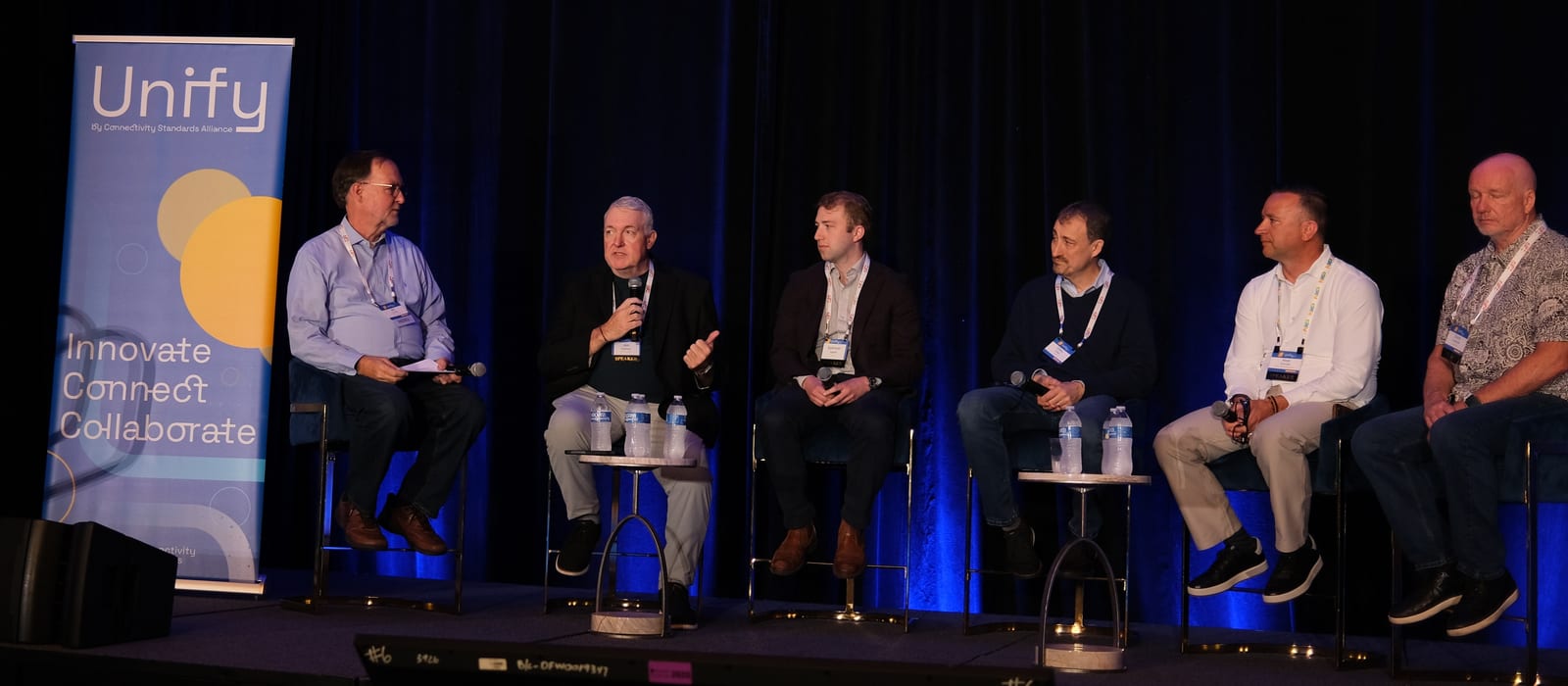
Matter was the final expression of that work: make it truly universal. Comcast, Amazon, and Samsung were already collaborating inside the Alliance despite competing in the market; the missing pieces were Apple and Google. I served on the negotiation team that brought both to the table, and I'm one of the co-creators of what shipped in November 2022 as Matter. I contributed to its security model, helped move certification into industry-wide labs, and a few months after launch I left the board, ending a fourteen-year run with the job done.
I'm not certain that Matter will be the technology that makes the smart home truly ubiquitous, but I am certain the smart home won't get there without something like it.
Twenty years separate a screen-scraped web form from a standard backed by every major ecosystem, with an installed base of controllers in the hundreds of millions from the day it shipped. Thousands of engineers across hundreds of companies now work on Matter, from the open-source codebase to the products on shelves. The thread through all of it is one conviction: open systems win, and someone has to do the work.
- 2003 TR-064 drafted A standardized local configuration API, out of screen-scraping fragility.
- 2004 TR-069 ships Its descendants now manage well over a billion devices worldwide.
- 2009 Zigbee board seat Lead from inside something that already has the shell of what you want.
- 2014 Zigbee 3.0 announced Market profiles that could not reliably talk to each other, consolidated back into one.
- 2017 dotdot spins out at CES The shared vocabulary, unlocked from the radio so any network could carry it.
- 2021 Zigbee becomes CSA A technical consortium turned multi-standard alliance.
- 2022 Matter ships Apple and Google at a table where Comcast, Amazon, and Samsung already sat.